
Breaking the Cycle: Your 30-Minute Night Shift Sleep Protocol
You've clocked out. The shift is over. Your body aches from hours on your feet, but your mind still races, replaying calls, charting, the constant hum of the emergency room. The fluorescent lights of the breakroom still burn behind your eyelids, a phantom echo of the chaos you just left.
That stark disconnect—profound physical exhaustion yet a brain stubbornly refusing to quiet—is the cruelest joke of night work. You watch precious daylight sleep hours tick away, frustration mounting. This isn't just "winding down"; it's a physiological battle against lingering autonomic arousal, your body's fight-or-flight system still humming, and a disrupted cortisol rhythm keeping you alert when it should be dipping.
A staggering 61.8% of night shift workers grapple with short sleep duration, a figure far higher than day workers. This ingrained physiological resistance demands a deliberate strategy to force your system to stand down.
Why Your Brain Fights Daytime Sleep
Think it's just you? This internal resistance isn't a flaw; it's your body's ancient circadian clock, meticulously tuned to wake with the sun and sleep with the dark. When you work the night shift, you force a fundamental misalignment.
This internal clock dictates melatonin release, the hormone signaling sleep. Night shift work actively suppresses natural melatonin production, leaving your brain without its primary sleep initiation signal. Even after your shift, the mere presence of daylight signals wakefulness, further inhibiting melatonin.
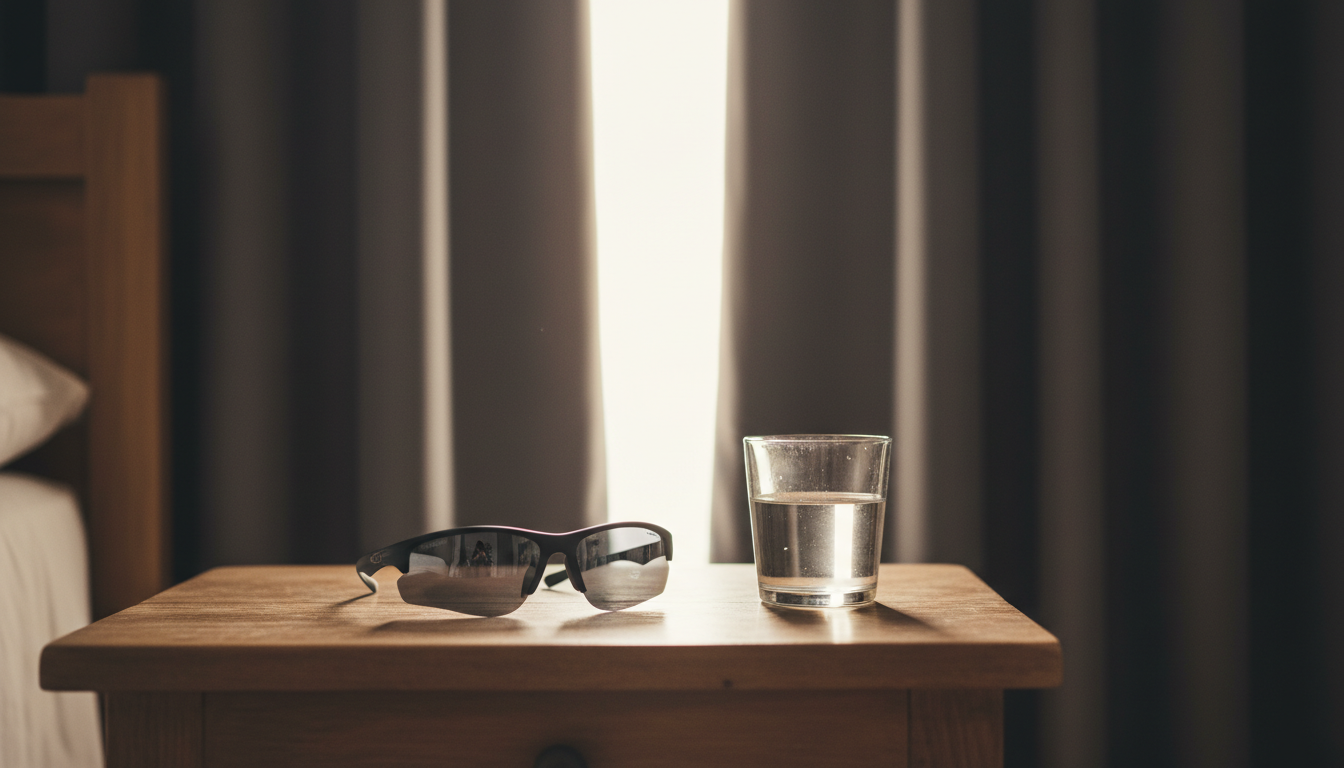
This is why tactics like wearing dark wraparound sunglasses post-shift and creating a pitch-black sleep environment are critical. They tell your brain it's finally night, a signal that reduces sleep onset latency and increases total sleep duration AASM. This constant fight against biology disrupts the homeostatic sleep drive, often manifesting as Shift Work Sleep Disorder (SWSD) in many night shift workers. Your brain isn't just resisting; it's defending its natural rhythm.
Your 30-Minute Post-Shift Stand-Down Protocol
Stop fighting your biology the moment your shift ends. Your brain isn't just defending its natural rhythm; it waits for signals to stand down. This 30-minute protocol is your deliberate off-ramp, a precise sequence designed to tell your system that the work is done and rest begins.
Successful night shift nurses, like the 34 surveyed in a Journal of Advanced Nursing study, consistently rely on clear routines and effective sleep environments. Embrace this structure:
- Phase Out the Light (Minutes 0-5): The moment you leave your workplace, put on wraparound sunglasses. Bright light exposure, even indirect, suppresses melatonin production, delaying sleep onset. This simple act reduces sleep onset latency and increases total sleep duration AASM. Drive home in dim light, then step into an already dark, prepared sleep space.
- Signal with Melatonin (Minutes 5-10): Take a 3mg melatonin supplement. This isn't a knockout drug; it's a chronobiotic, signaling to your brain that it's "night." This small dose before daytime sleep helps realign your circadian rhythm, a crucial step for night shift workers NIH.
- Cool Down Your Core (Minutes 10-20): Your body drops its core temperature by about 2 degrees Fahrenheit to initiate sleep. Take a lukewarm shower, not hot, to gently lower your body temperature. Set your bedroom thermostat to between 60-67°F (15-19°C).
- Unplug and Unwind (Minutes 20-30): Absolutely no screens. Blue light exposure from phones, tablets, or TVs tells your brain it's still daytime, disrupting melatonin's crucial signal. Instead, read a physical book, listen to a calming podcast, or simply sit in quiet darkness.
This isn't about hoping for sleep; it's about systematically dismantling the physiological and psychological barriers to it. You actively switch off your work brain.
Beyond the Shift: Days Off and Social Life
The work brain is switched off. Then comes your string of off-days, and with it, the natural inclination to flip your schedule entirely. You want to see friends, live a "normal" life. Yet this is how you manufacture perpetual jet lag, forcing your circadian phase into misalignment.
Your internal clock struggles to re-sync. The goal isn't to live like a hermit; it's to find a disciplined compromise. Instead of a full eight-hour flip, anchor your sleep around a consistent core window, shifting bedtime and wake time by 2-3 hours from your shift schedule. This consistency prevents circadian meltdown.
When social plans call, a well-timed 20-30 minute power nap blunts your homeostatic sleep drive enough to get you through an evening without completely wrecking your readiness for the next shift. It’s managing the physiological cost of your schedule. You can have a life beyond work, but it requires deliberate planning.
Your Shift Worker's Sleep Field Manual: A Checklist
Building a life beyond work means being deliberate about your recovery. This isn't about hoping for sleep; it's about engineering it. Here's your immediate post-shift protocol:
- Block Light Instantly: Don your darkest wraparound sunglasses before leaving work. Limit all bright light exposure on your commute home. This signals to your brain that night has fallen, protecting melatonin production.
- Cool Your Core: Set your bedroom thermostat to 60-67°F (15-19°C) and take a lukewarm shower. Your body needs to drop its core temperature by about 2 degrees Fahrenheit to initiate sleep.
- Silence the Noise: Use earplugs and a white noise machine. Eliminate any light leaks in your bedroom. Your sleep environment must be a sanctuary from the world you just left.
- No Stimulants or Sedatives: Avoid caffeine, nicotine, and alcohol for at least 4-6 hours before your intended sleep window. Alcohol fragments sleep architecture; caffeine blocks adenosine, your natural sleep signal.
- Seek Expert Guidance: If consistent, restorative sleep remains elusive after two weeks of strict adherence, consult a sleep specialist. Persistent insomnia or excessive daytime sleepiness requires medical intervention.
Sources
- CDC / NIOSH (2016). Plain Language About Shift Work.
- American Academy of Sleep Medicine (AASM). Sleep Hygiene.
- National Center for Complementary and Integrative Health (NCCIH) / NIH. Melatonin: What You Need To Know.
- PubMed / Journal of Advanced Nursing (2023). The impact of shift work on nurses' sleep quality and mental health: A systematic review and meta-analysis.
This is not medical advice. Talk to your provider.
The challenge isn't to eliminate the demands of your job, but to build a strong system that lets your body claim its rest within them.