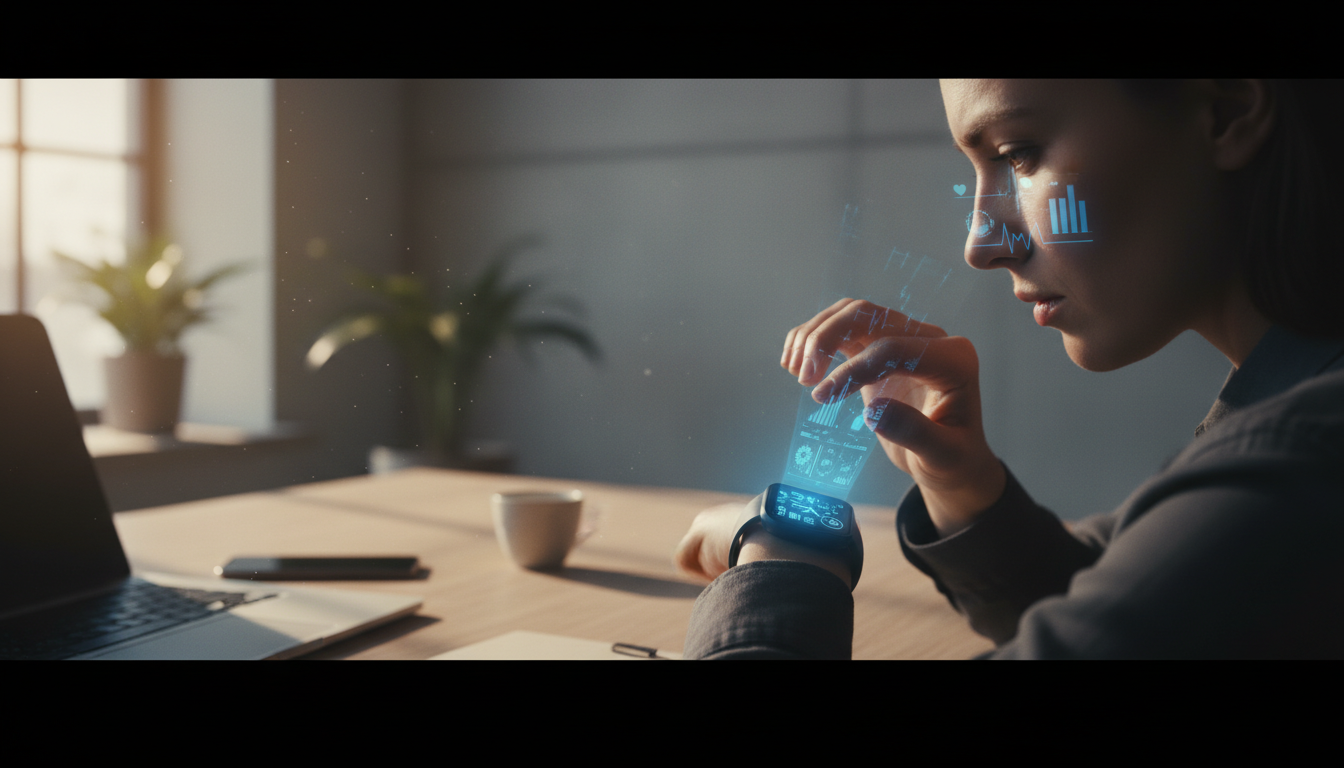
The Paradox of Pursuit: When Trying Too Hard to Sleep Keeps You Awake
It's 6 AM. Your alarm hasn't even gone off, but you're already awake, heart pounding. Not from a nightmare, but from the dread of checking your sleep tracker. You tap the screen, and there it is: a dismal 58. Instantly, your day feels ruined before it's even begun. You wake, still groggy, but before your feet even hit the floor, your gaze snaps to the wrist-worn device or the app on your phone. The number stares back: a sleep score, a grade for your night’s rest. A low score lands like a punch to the gut, instantly souring your day. A high one only gives you a quick, hollow pat on the back. Modern sleep technology presents a stark paradox. Tools designed to bring clarity and control often end up doing the opposite. Sleep, a natural restorative process, transforms into another performance metric you can fail. The pressure to "achieve" optimal sleep, to hit perfect REM and deep sleep percentages, becomes a self-inflicted wound. This makes the very act of falling asleep a source of acute stress. This constant self-surveillance, fueled by performance anxiety, has a name: orthosomnia. It’s the surprising twist where the obsessive pursuit of perfect sleep, often driven by your tracker's data, actively keeps you awake.Orthosomnia: Why Your Quest for Perfect Sleep Backfires
Orthosomnia, a term first introduced in the Journal of Clinical Sleep Medicine in 2017, describes an obsessive pursuit of optimal sleep, often fueled by data from personal sleep trackers. It emerged from observations of patients seeking treatment for self-diagnosed sleep disturbances, driven by their device metrics rather than how they actually felt. This isn't a niche concern. Recent research shows algorithm-identified orthosomnia affects a notable segment of the general population, with prevalence estimates ranging from 3.0% to 14.0% depending on the specific diagnostic criteria applied (Brain Sciences, 2024). Are you chasing a perfect score, only to feel worse? It’s a condition where the very tools designed to help you understand your sleep instead become a source of anxiety, creating a cycle where the quest for "perfect" sleep paradoxically leads to worse sleep.When Your Sleep Tracker Fuels Anxiety, Not Rest
That cycle often begins not with the sleep itself, but with the data. Most consumer sleep trackers, while useful for spotting trends, aren't medical-grade devices. They rely on estimations of sleep stages and disturbances that lack clinical precision (AASM, 2020). Interpreting these imprecise numbers as absolute truth creates anxiety. A low 'sleep score' or perceived deficit in 'deep sleep' triggers worry, even if you woke feeling rested. This misinterpretation feeds into performance anxiety. Gamified metrics – scores, readiness levels – subtly pressure you to *achieve* good sleep, rather than letting it happen naturally. Chasing an 'ideal' number, and constantly checking data, especially upon waking, reinforces inadequacy when numbers fall short. This negative feedback loop – anxiety about data, worse sleep, then poorer data, more anxiety – is a direct path to what many call tracker-induced insomnia, or orthosomnia.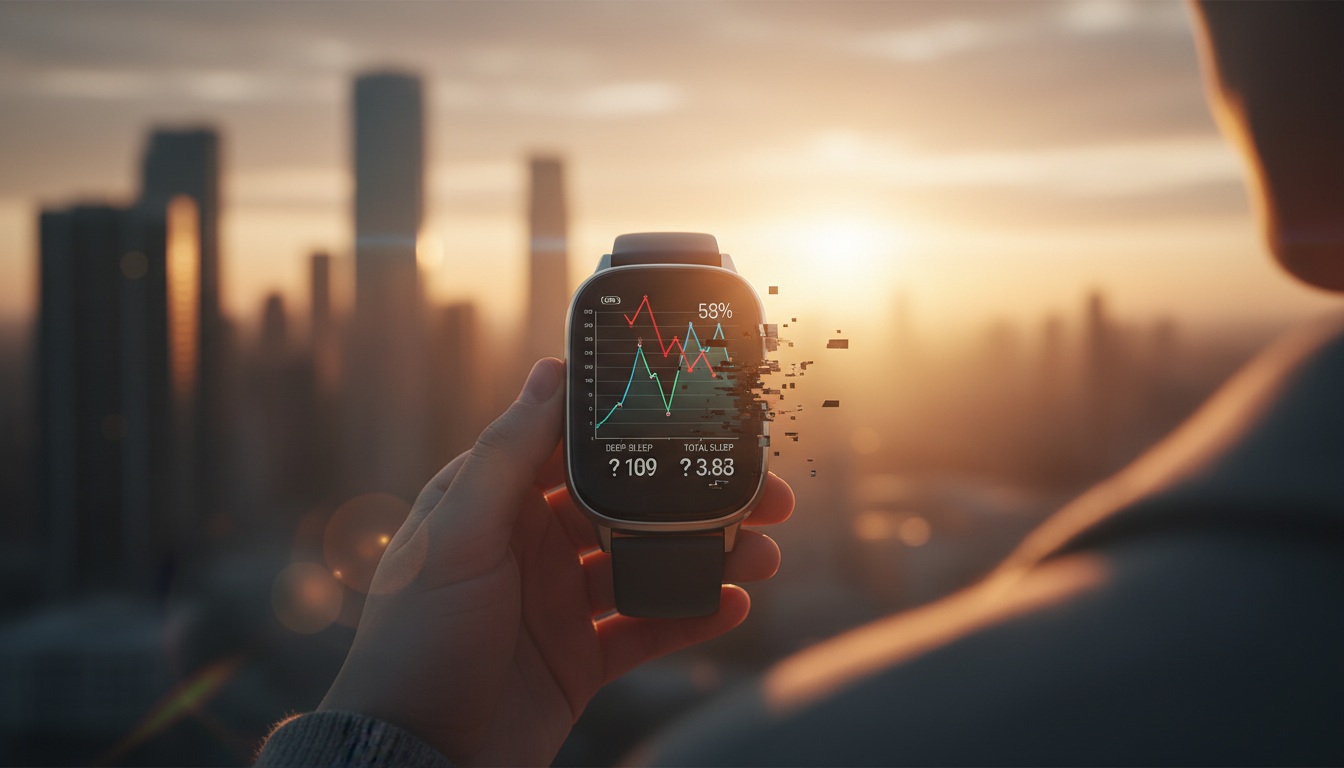
The Vicious Cycle: How Effort Becomes Arousal
That cycle, fueled by the pressure to "perform" sleep, kicks off a deeply counterproductive response. Your effort to rest transforms into heightened physiological arousal. Your brain senses this pressure, interprets it as stress, and prompts cortisol release. This isn't just a mild inconvenience; cortisol is a potent wakefulness hormone, designed to keep you alert and ready for action, effectively short-circuiting your natural descent into sleep. Spend enough nights battling this internal alarm, and your bed becomes a trigger for conditioned arousal. Instead of a sanctuary, it transforms into a battleground of frustration and wakefulness. Are you tired of fighting your own bed? This chronic effort and sleep loss do more than just make you tired. They actively fuel anxiety. Even short periods of insufficient sleep directly result in fewer positive emotions and a measurable increase in anxiety symptoms (Psychological Bulletin, 2023), locking you into a feedback loop where the very worry about sleep guarantees its absence.Reclaiming Your Data: Using Trackers Without Obsession
That loop, where concern about your sleep score actively degrades your sleep, often starts with how you interpret the numbers. Your sleep tracker is a tool, not a judge. Its daily pronouncements are more noise than signal, often imprecise guesses about sleep stages. They estimate via heart rate and movement, not definitive brain waves. Breaking free means understanding these limitations. What you *can* trust are trends: your consistent bedtime, average wake time, and main sleep duration across weeks. A single bad night means almost nothing; focus on sustained shifts in your habits. Instead of fixating on a nightly score, ask what your data tells you about your behaviors. Does sleep latency jump after late-night screens, or duration dip after an evening shift? Use the data as a mirror for your actions, a prompt for adjustment, not a daily performance review. Your goal isn't a perfect graph; it's better sleep, and that starts with what you *do*, not what your device *says* you did.Ditching the Pressure: Practical Steps to Natural Sleep
The path back to natural sleep begins by disarming the pressure you've built around it. When your mind races with the command to 'sleep now,' it triggers a fight-or-flight response, making rest impossible. Instead of wrestling with this conditioned arousal, try a gentle surrender. One powerful technique is paradoxical intention: softly try to stay awake when you get into bed (PubMed, 2024). This isn't about *actually* staying awake, but about removing the performance anxiety that keeps you tethered to wakefulness. By releasing the pressure to fall asleep, you often find yourself drifting off more easily, breaking that cycle of frustration. For more entrenched sleep anxiety, Cognitive Behavioral Therapy for Insomnia (CBT-I) stands as the gold standard. This structured program, effective for 70-80% of people (Cleveland Clinic), directly targets the thoughts and behaviors that perpetuate insomnia. It teaches you to rebuild a healthy relationship with sleep without relying on external metrics. It's about retraining your brain, not just tracking its output. Integrate simple mindfulness and relaxation into your routine. A body scan, deep diaphragmatic breathing, or even just focusing on the sounds of your environment can quiet the mental chatter. For shift workers especially, where 'perfect' sleep metrics are a fantasy, prioritize consistency in your wake-up time, even after a chaotic stretch. This anchors your circadian rhythm, signaling to your body when it's truly time to rest, regardless of the numbers on a screen.Your Reset Protocol
- Practice Paradoxical Intention: Lie in bed, lights off, and gently try to stay awake. Focus on the sensation of your eyelids, not on falling asleep.
- Anchor Your Wake Time. Choose a consistent wake-up time, even on days off or after a night shift, and stick to it within 30 minutes.
- Create a Wind-Down Ritual. Dedicate 60 minutes before bed to non-stimulating activities: reading a physical book, gentle stretching, or deep breathing.
- Limit Screen Time. Power down all screens (phone, tablet, TV) at least 90 minutes before your intended sleep time.
- Seek CBT-I. If sleep anxiety persists for more than a few weeks, consult a sleep specialist for CBT-I.
Sources
- Journal of Clinical Sleep Medicine (2017)
- Brain Sciences (2024)
- AASM (2020)
- Psychological Bulletin (APA) (2023)
- PubMed (Study Protocol) (2024)
- Cleveland Clinic
This is not medical advice. Talk to your provider.
The goal isn't perfect sleep, but a natural, unforced surrender to rest.