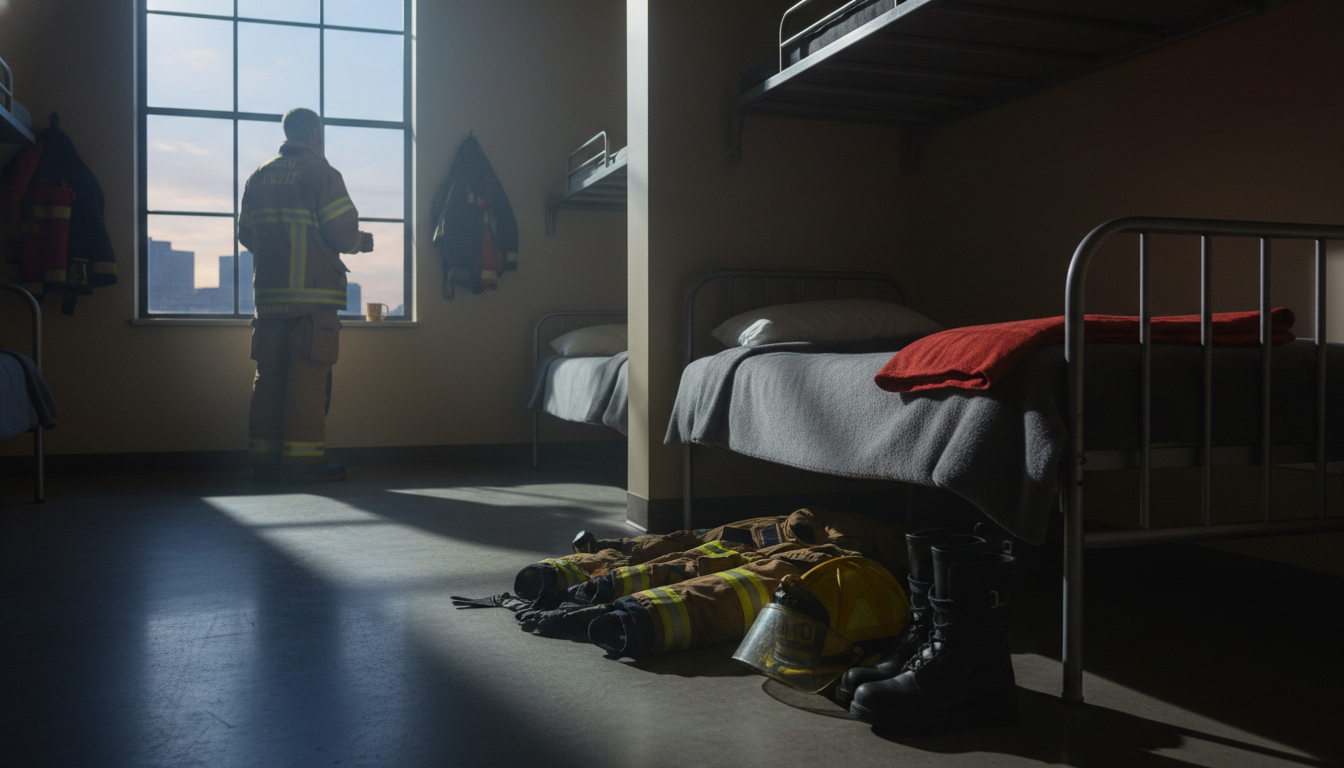
The Paradox of the Station: Ready to Go, Unable to Rest
The station lights dim. The hum of the AC is the only constant. You finally close your eyes, chasing a ghost of rest. But the radio crackles, a phantom siren echoes, and your body refuses to fully unwind. This isn't a comfort issue; it's a gut-level physiological conflict. Your nervous system, primed for instant action, fights the natural descent into deep sleep. This always-on wiring means a staggering 84% of firefighters are classified as poor sleepers while on duty (PubMed (Sleep), 2026). The cost is steep. Chronic sleep deprivation means your brain stalls, memory goes dark, and split-second decisions turn compromised. You battle constantly against your own circadian rhythm. This explains why nearly 40% of firefighters suffer from at least one diagnosed sleep disorder—insomnia, shift work disorder, or sleep apnea (IAFF, 2025). Deep rest isn't a luxury. It's the foundation of operational readiness, yet the job itself keeps it a phantom.Why Your Body Fights On-Shift Sleep: The Science of Survival
On-shift sleep isn't merely lighter; it's shattered. A striking 84% of firefighters are classified as poor sleepers while at the station, a stark contrast to the 53.4% off-duty (PubMed (Sleep), 2026). This isn't bad luck. It's a biological imperative for survival. Your brain loads adenosine, a sleep-inducing chemical, building what's known as homeostatic sleep drive. But in an environment demanding constant vigilance, your body floods with cortisol and chokes melatonin, killing that natural drive. The result is fragmented sleep, insufficient time in the deep, restorative stages your body needs to recover. These constant micro-arousals erode your clarity, leaving your mind numb, like a drunk on duty after prolonged wakefulness. How can you lead a charge when your brain is fighting a fog? You can't "bank" sleep like money. But consistent pre-shift rest builds a vital shield, blunting the unavoidable on-shift disruption. The goal isn't perfect sleep—impossible in a firehouse—but ruthlessly maximizing every minute of rest you can seize.Immediate Triage: Quick Relaxation for When the Bell Rings Soon
The bell can ring at any moment, shattering any sliver of peace. When unpredictability is the constant, the goal shifts from full sleep cycles to wrestling control of your autonomic nervous system. Force your system to stand down. Snatch whatever restorative rest you can. This is immediate triage for your brain and body. For a quick jolt of alertness without the grogginess of deep sleep, the tactical nap is your sharpest weapon. Aim for 20 to 30 minutes. This duration exploits lighter sleep stages, sharpening vigilance and fueling performance without pushing into slow-wave sleep. If you have 45 minutes, consider a coffee nap: drink a cup of coffee, then lie down for 20 minutes. Caffeine kicks in around 20-25 minutes, so you wake as its stimulating effects begin, supercharging the restorative benefits. Beyond naps, execute quick mental and physical relaxation. A simple box breathing exercise (inhale 4, hold 4, exhale 4, hold 4) slams your system out of fight-or-flight, into a calmer state, lowering heart rate, preparing for rest. Tense and release muscle groups from your toes to your head. These aren't full sleep sessions; they're deliberate acts of calming, letting your brain stand down, even for a moment. This approach isn't about traditional deep sleep, but ruthlessly manipulating your body's arousal levels to wring maximum benefit from minimal time.
The Pre-Sleep Protocol: Optimizing Your Station Bunk for Deep Rest
When a longer window for rest opens, you shift from mere disengagement to calculated sleep assault. Your station bunk isn't a dark, quiet bedroom. Make it obey. Achieve total darkness with a quality eye mask, killing every photon that sabotages melatonin production and screams 'wake up!' to your brain, hitting light management head-on. Drown out station noise with earplugs, creating a quiet sanctuary. Crucially, manage your bunk's temperature: a small fan dramatically aids thermoregulation, helping your core body temperature drop the necessary 2 degrees Fahrenheit for sleep initiation. Before you attempt sleep, execute a consistent 10-15 minute wind-down routine. This commands your nervous system to stand down, killing the cortisol levels that keep you wired. Read a physical book, perform gentle stretches, or focus on diaphragmatic breathing. Upon waking, even after a short nap, hit bright light to reset your circadian phase. This disciplined approach to sleep isn't just about personal well-being; it's about operational readiness. Firefighters who received targeted sleep health education reported 46% fewer disability days than controls (PubMed (Sleep), 2017).Your On-Shift Rapid Rest Checklist
To turn readiness into raw power, this is your immediate checklist for on-shift deep rest, built to maximize recovery in limited windows:- Assess Your Rest Window: If less than 30 minutes, hit a tactical or coffee nap. Over 60 minutes? Drive for a full 90-minute sleep cycle for maximum benefit.
- Kill All Light: Use blackout curtains or a high-grade eye mask. Even a sliver of light sabotages melatonin release.
- Silence the Chaos: Deploy earplugs or noise-canceling headphones. Override station disruptions.
- Drop Core Temp: Adjust the room thermostat if possible, or use cooling gear. Your body needs that 2°F drop to initiate sleep.
- Command Mind & Body: Engage in Progressive Muscle Relaxation or Box Breathing (4-4-4-4 count). Kill tension, silence the internal chatter.
- Cut Stimulants: Caffeine off 6 hours pre-sleep. No heavy meals, no sugar bombs.
- Weaponize Light: Night call transition? Blue-blocking glasses. Day shift? Hit bright light strategically.
Sources
- IAFF (2025)
- PubMed (Sleep) (2026)
- PubMed (Sleep) (2017)
- First Responder Well-Being (2025)
This is not medical advice. Talk to your provider.
The alarm will always ring again. Your duty is to meet it with a mind and body as ready as possible.