The Morning Dread: When Your Tracker Says You Failed
You stretch, feeling the rare, deep satisfaction of a night that actually felt restorative, the kind where you drift awake without an alarm. A good morning, you think. Then you reach for your phone, the sleep app loading its verdict. *Poor. 68%. Inefficient.* The numbers flash red, a sudden, cold splash of doubt across your well-rested morning. That comfortable feeling evaporates, replaced by a creeping anxiety. Did you just *imagine* you slept well? This disconnect—the gap between your lived experience and a wearable device’s pronouncement—is a quiet, pervasive dread for millions. What starts as a tool for insight often turns into a source of self-doubt, transforming a good night into a data-driven failure. We carry these devices everywhere, relying on their metrics for fitness, steps, and increasingly, the most intimate biology of our rest. They promise clarity, but for many, they just deliver a fresh flavor of morning anxiety.Beneath the Score: What Wearables Actually Measure (and Miss)
Many people get anxious about low sleep scores because they misunderstand what these devices actually measure. Your tracker isn't a miniature sleep lab. It doesn't claim to be. Consumer wearables, like the Oura Ring Gen3, are highly sensitive, ≥95% for sleep versus wake detection (Sensors (Basel), PubMed, 2022). Overall accuracy for sleep/wake ranges from 78-95% (Sleep, PMC, Oxford Neuroscience, 2021). This means they're quite reliable at knowing if you're actually resting or just tossing and turning. Where these devices fall significantly short is in their ability to accurately identify specific sleep stages—deep sleep, light sleep, and REM. While some, like the Fitbit Charge 4 and WHOOP, show moderate accuracy when assessing sleep stages (JMIR mHealth and uHealth, 2024), their overall sleep stage accuracy is inconsistent, ranging from 38-70% (Sleep, PMC, Oxford Neuroscience, 2021). The reason is simple: a consumer tracker relies on indirect measurements like your heart rate variability and movement. These are proxies. They're indicators of your body's state, but they don't directly measure the brain's electrical activity. That's the gold standard for sleep staging via polysomnography (PSG). You can't infer brainwaves from a wrist pulse, and that's the core limitation.Orthosomnia: The Pursuit of Perfect Data, The Rise of Anxiety
While trackers offer a window into your night, fixating on their numerical scores turns that window into a cage. This relentless pursuit of a "perfect" sleep score, often driven by wearable data, has a name: orthosomnia. It describes an unhealthy preoccupation with perfecting sleep metrics, a condition acknowledged by the American Academy of Sleep Medicine (AASM, 2018). It paradoxically contributes to both insomnia and heightened anxiety. When you wake feeling rested, yet your device assigns you a low "readiness" or "sleep quality" score, your brain registers a mismatch. This cognitive dissonance triggers a cascade of worry, increasing your **autonomic arousal** – the body's fight-or-flight response. Instead of drifting off peacefully the next night, you're now mentally reviewing your day's activities, wondering what "ruined" your sleep. You're creating the very stress that keeps you awake. The device, meant to inform, begins to dictate your self-perception of rest, making you feel inadequately recovered even when your subjective experience says otherwise.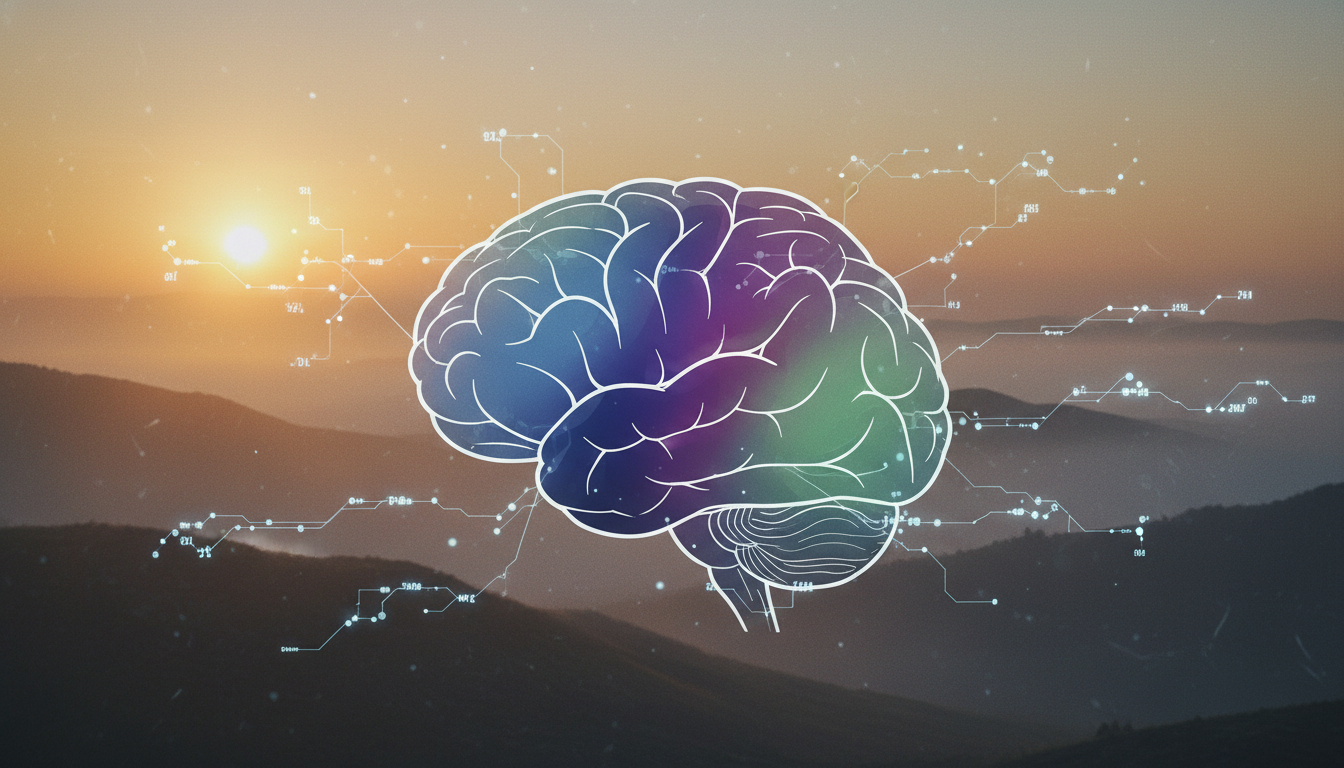
Beyond the Numbers: Reclaiming Your Body's Inner Wisdom
Instead of letting a single number define your night, step back and listen to your body. Your true measure of restorative sleep isn't a score on a screen, but how you feel upon waking. Pay attention to your energy levels, your mood, and your ability to focus throughout the day. These subjective indicators are far more telling than any algorithm. They reflect the nuanced interplay of your circadian rhythm and the complex regulation of neurotransmitters. Real sleep problems don't show up as a low 'sleep score.' They show up as persistent daytime fatigue that impacts your function, difficulty concentrating, or noticeable mood disturbances. These are the signals of dysregulation in systems involving **orexin** for wakefulness, **GABA** for calm, and **acetylcholine** crucial for memory and cognitive repair. A device cannot precisely measure these intricate chemical balances. Individual sleep needs vary widely and fluctuate with life's demands. Expecting rigid adherence to a 'perfect' score ignores the body's natural adaptability. Trust your internal barometer more than an external one; it's the most sophisticated sleep tracker you own.A Protocol for Data-Driven Peace: Using Your Tracker Wisely
Your internal barometer is paramount. Your sleep tracker still serves as a valuable tool, but only if you learn to interpret its signals without succumbing to 'orthosomnia'—the obsession with perfect sleep data (AASM, 2018). Reframe your relationship with the device: it isn't a sleep judge, but a trend-spotter, revealing patterns over weeks, not daily fluctuations (JMIR mHealth and uHealth, 2024). Focus on what trackers measure best: total time in bed and the consistency of your sleep and wake times. These metrics directly reflect core sleep hygiene principles and have the most significant impact on your circadian rhythm. Ignore the granular sleep stage data, like 'deep sleep' percentages. Consumer wearables are notoriously inaccurate here, and fixating on them only fuels anxiety (Sleep, PMC, Oxford Neuroscience, 2021; Sensors (Basel), PubMed, 2022). Instead, correlate the data with how you actually feel. If your tracker reports a 'bad' night but you wake up refreshed, trust your body. If you feel sluggish and the data shows a consistent pattern of reduced sleep duration, use that insight to investigate lifestyle adjustments. Use the data for experimentation: if you implement a new sleep strategy—like an earlier dinner or a pre-bed meditation—observe if it correlates with positive trends in your total sleep duration or consistency over time. Crucially, if your tracker becomes a source of stress, put it away for a week or two. Reconnect with your natural rhythms, free from the digital gaze.Your Data-Driven Peace Protocol
- Reframe the Device: View your tracker as a trend-spotter for weeks, not a daily sleep judge.
- Prioritize Core Metrics: Focus on total time in bed and consistent sleep/wake times; these are most accurate.
- Dismiss Sleep Stages: Ignore daily deep or REM scores; they are unreliable and often anxiety-inducing.
- Trust Your Body First: If you feel rested, your sleep was good, regardless of the numbers.
- Experiment and Observe: Make a lifestyle change, then track trends in duration or consistency for weeks.
- Take a Digital Detox: If data causes distress, remove your tracker for a week or two.
Sources
- American Academy of Sleep Medicine. (2018). Orthosomnia: The New Sleep Disorder.
- Sleep, PMC, Oxford Neuroscience. (2021). Accuracy of Sleep Stage Classification Using Wearable Devices: A Systematic Review.
- Sensors (Basel), PubMed. (2022). Wearable Sensors for Sleep Monitoring: A Review.
- JMIR mHealth and uHealth. (2024). The Role of Wearable Devices in Promoting Healthy Sleep: A Scoping Review.
This is not medical advice. Talk to your provider.
The real measure of a good night's sleep isn't a number on your wrist, but how you move through the day.