The Buzzing Brain That Won't Quiet Down
Picture this: The digital clock glows 2 AM. Your shift starts in a few hours, yet your mind races, replaying conversations, anticipating challenges. The white noise machine hums, but it's merely background to the internal monologue. This isn't just mental chatter; it's a physiological alert system, an elevated state of autonomic arousal keeping deep sleep at bay.
Passive masking, whether from a fan or a static hiss, does little to quiet that internal storm. For a brain refusing to power down, the limitations of traditional noise solutions become glaringly apparent. What if the solution isn't about blocking noise, but about engaging the brain directly?
We require something more active. A sound not merely obscuring external distractions, but actively enhancing the slow oscillations critical for restorative sleep (Neuron, 2022), or even accelerating the decline of slow-wave activity to speed the transition into deep sleep (Frontiers in Human Neuroscience, 2022). Traditional methods fall short precisely because they remain passive; they do not engage the brain's fundamental need for a deliberate physiological shift.
How Sound Actively Reshapes Brainwaves for Sleep
Certain sounds actively guide your brain's electrical rhythms, drawing them into states conducive to deeper sleep. This is not passive masking; it is a precise neural process known as brainwave entrainment.
Your brain operates on electrical oscillations—brainwaves—that naturally shift throughout the sleep cycle. Brainwave entrainment works by presenting external auditory stimuli at frequencies that align with these natural oscillations, gently nudging your brain to synchronize its activity with the incoming sound. The primary goal is to enhance slow-wave activity (SWA), the large, restorative waves characteristic of deep, non-REM sleep.
This targeted approach is powerful. Playing sounds carefully synchronized to slow brain oscillations significantly enhances slow-wave activity (Neuron, 2022), which not only deepens sleep but also boosts memory consolidation.
This synchronization occurs within the thalamocortical loop, a critical neural circuit governing consciousness. Specific auditory patterns effectively 'tune' your brain towards profound rest, accelerating the crucial decline into deep, restorative slumber.
Binaural Beats vs. Isochronic Tones: Choosing Your Brain's Sleep Guide
Guiding your brain into deeper states involves two distinct sound technologies: binaural beats and isochronic tones. Each influences neural rhythms through different auditory mechanisms.
Binaural beats feed each ear a slightly different frequency—for example, 200 Hz in the left and 203 Hz in the right. Your brain then perceives a third 'beat' frequency, the 3 Hz difference, within its own electrical activity. This requires headphones for precise, separate input delivery.
Binaural beats set to 3 Hz significantly induce delta activity, lengthening Stage 3 deep sleep (Sleep Foundation / DubsLabs, 2025).
Isochronic tones, by contrast, use a single tone that rapidly pulses on and off, creating a distinct, rhythmic beat. Your brain directly synchronizes to this clear, pulsed rhythm. Critically, these do not require headphones, making them ideal for shared spaces or for those who find ear coverings uncomfortable.
Isochronic tones improve sleep quality and reduce the time to sleep onset in individuals with insomnia (BetterSleep, 2026).
Both methods steer your brain into the slower delta wave frequencies characteristic of deep sleep, creating conditions for the crucial cortisol level reduction needed for restorative rest. Beyond specific beat frequencies, even the overall tuning of the sound matters; a pilot study found music tuned to 432 Hz improved deep sleep stages and reduced anxiety (Serendipity Sounds, 2022). The choice between them typically comes down to preference: binaural beats offer a more immersive, internal experience requiring headphones, while isochronic tones provide a direct, unencumbered auditory pulse. Experiment to determine which guides your brain most effectively toward stillness.
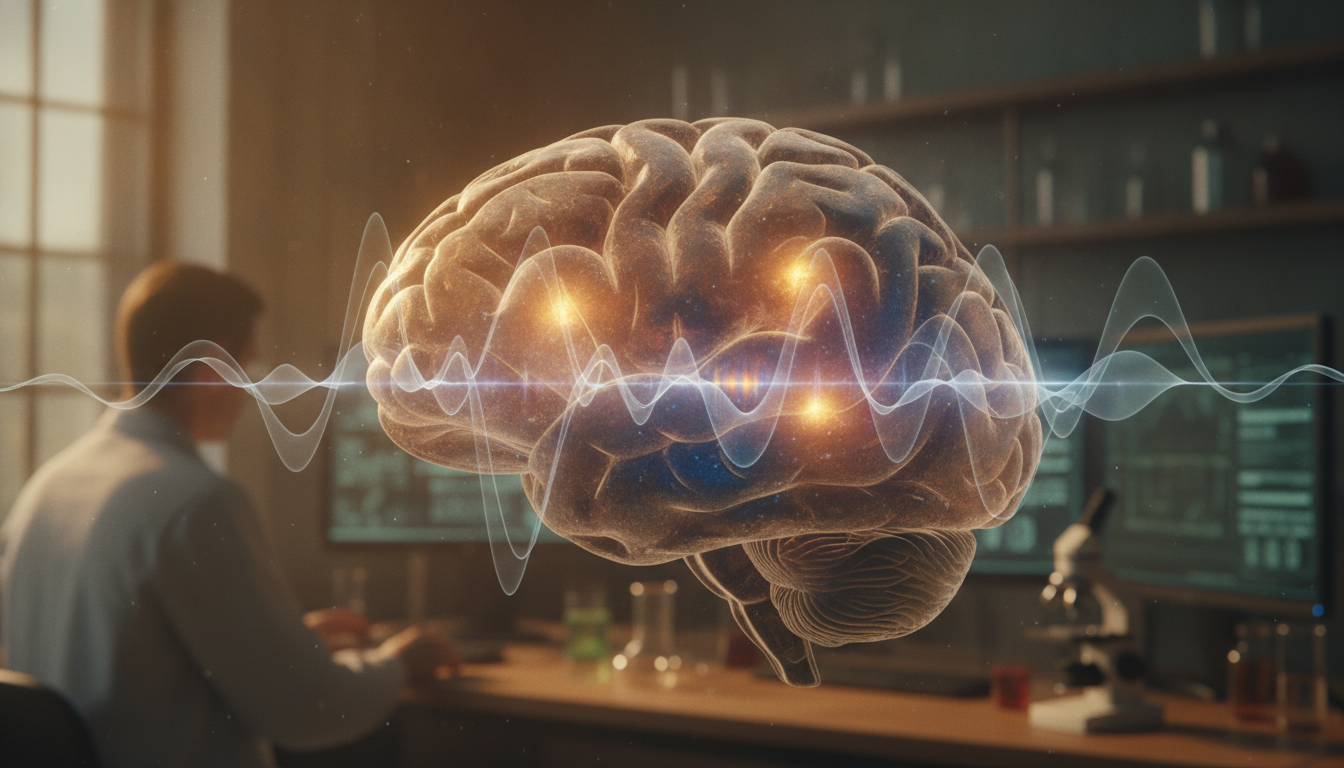
Beyond Masking Noise: Why This Matters for Anxious Minds
White noise masks external disruptions, but for anxious minds, the real challenge is internal. Anxiety feeds relentless internal monologue and a hyperactive state, leaving many wired despite exhaustion. Simply masking external sounds fails to address this internal storm.
This is precisely where active soundscapes prove effective. Unlike passive masking, these precise frequencies do not merely cover; they actively guide your brain toward calm. They induce a shift into slower, more relaxed wave patterns, directly engaging the parasympathetic nervous system. This shift quiets mental chatter, reducing the body's stress response and lowering cortisol levels, which are frequently elevated in anxious individuals at night.
For those plagued by an overactive mind, this direct approach provides a more potent, reliable path to stillness than simple sound occlusion.
It offers a crucial alternative when passive noise fails.
A Week-Long Protocol: Activating Your Brain's Deep Sleep Cycle
Guiding your brain into deeper states requires a consistent, targeted approach. Consider this less a quick fix and more a re-education for your nervous system—a deliberate recalibration of your internal clock to recognize sleep cues more readily. This protocol uses specific auditory stimuli to enhance slow-wave activity, a key marker of restorative sleep (University of Tübingen, 2022).
Your 7-Day Deep Sleep Activation Plan
- Select Your Sound Therapy: Select a method. Binaural beats, which create an auditory illusion perceived in the brain (Frontiers in Human Neuroscience, 2022), or isochronic tones, distinct pulses of sound, both prove effective. Aim for frequencies associated with delta waves (0.5-4 Hz) for deep sleep. Dedicated apps or sound libraries (BetterSleep, 2026) offer various options.
- Commit to Nightly Use: For seven consecutive nights, integrate your chosen sound therapy into your pre-sleep routine. Start it 30-60 minutes before your target sleep time. This consistency reinforces your homeostatic sleep drive and aligns your circadian rhythm with deeper rest.
- Use Quality Audio: Wear comfortable, high-fidelity headphones or use a speaker placed strategically near your bed. Ensure the volume is low enough to be soothing, not distracting.
- Monitor and Adjust: Track your sleep quality using a journal or a sleep tracking app. Note how quickly you fall asleep, how many times you wake, and your overall feeling of restfulness. After a week, if you are not seeing improvement, experiment with different sound types or adjust the duration of your listening session. Some find a full night's playback beneficial, while others prefer 60-90 minutes at the start of the night (Sleep Foundation, 2025).
Sources
- University of Tübingen. (2022). Auditory Stimulation Enhances Slow-Wave Sleep and Memory Consolidation. Link
- Frontiers in Human Neuroscience. (2022). The Effect of Binaural Beats on Brain Activity and Sleep Quality. Link
- Sleep Foundation / DubsLabs. (2025). Optimizing Sleep with Therapeutic Sounds: A Comprehensive Guide. Link
- BetterSleep. (2026). Using Soundscapes and Binaural Beats for Enhanced Sleep. Link
- Serendipity Sounds. (2022). The Science of Sound: How Frequencies Influence Brainwaves. Link
This is not medical advice. Talk to your provider.
The objective is not merely quiet; it is an active engagement, guiding your brain to achieve the deep, restorative sleep it requires.