
Why Does My Tracker Say I Slept Poorly When I Feel Great?
You wake feeling clear-headed, ready for a long shift, perhaps even managing a morning workout. Then the sleep tracker flashes a dismal score, painting your night as fragmented or "poor." This immediate contradiction makes you question whether your body or your tech tells the truth.
Consumer sleep trackers reliably detect sleep versus wakefulness, often showing over 95% sensitivity. But they struggle significantly with classifying specific sleep stages, achieving only 50-86% accuracy compared to gold-standard polysomnography (J Clin Sleep Med, 2024). Your body’s fundamental need for rest—its homeostatic sleep drive—gets satisfied by overall sleep duration and quality. Not by granular, often inaccurate, stage data.
This mismatch means your subjective feeling often contradicts tracker data. Research shows a significant disconnect between how people perceive their sleep and objective measures (Sleep Med Rev, 2019). Worse, a tracker's "bad" report negatively impacts your mood and cognitive performance the next day, simply by setting that expectation—a phenomenon sometimes called "orthosomnia" (J Clin Sleep Med, 2017).
Trust your body's signals. They are often the truer gauge of restoration. Why let a gadget undermine your genuine rest?
What Do 'Low REM' or 'Too Much Light Sleep' Really Mean for Me?
Your body orchestrates sleep through distinct stages. Each serves a unique, vital purpose.
REM sleep, or Rapid Eye Movement, is where your brain actively processes emotions, consolidates memories, and cements new learning. Deep sleep—NREM Stage 3—is the crucial period for physical restoration, cellular repair, and the release of growth hormone.
Despite their biological importance, the precise percentages your sleep tracker reports for these stages deserve skepticism. As we covered, while consumer devices reliably distinguish sleep from wake, their accuracy for classifying specific sleep stages varies widely—often between 50-86% compared to gold-standard polysomnography (J Clin Sleep Med, 2024).
Your brain, through an intricate ultradian rhythm and precise neurotransmitter regulation, naturally prioritizes sleep stages. It gives your body what it needs most. If you've been REM-deprived, for instance, your system often rebounds with more REM on subsequent nights. It ensures your body optimizes stage distribution, even if a tracker doesn't perfectly capture it.
Obsessing over these minute-by-minute breakdowns misses the larger, adaptable biological picture. Focus instead on consistent sleep duration and overall sleep quality: waking refreshed, maintaining energy throughout the day, and managing stress effectively. These are the true indicators of restorative sleep.
Which Sleep Tracker Metrics Are Truly Actionable?
Granular breakdowns of sleep stages often mislead. But consumer trackers excel at distinguishing between wakefulness and sleep itself. Some even demonstrate over 95% sensitivity for this fundamental function (J Clin Sleep Med, 2024).
This core accuracy means we trust certain metrics. They speak directly to your homeostatic sleep drive and circadian rhythm.
The most critical metric: **total sleep duration**. Aim for 7 to 9 hours. This signals sufficient time for your body to complete its restorative processes.
Closely related: **consistency** in your bedtime and wake time. Trackers reliably measure this, reflecting a stable circadian rhythm.
Metrics like **sleep onset latency**—how long it takes to fall asleep—and **wake after sleep onset (WASO)** are also generally accurate. They highlight issues like fragmented sleep or an overactive nervous system at bedtime.
Beyond a single night, the longitudinal variability in your sleep predicts elevated risk for conditions like obstructive sleep apnea and hypertension (J Am Heart Assoc, 2019). These same devices easily track this.
These are the numbers that provide a real path to understanding and improving your rest.
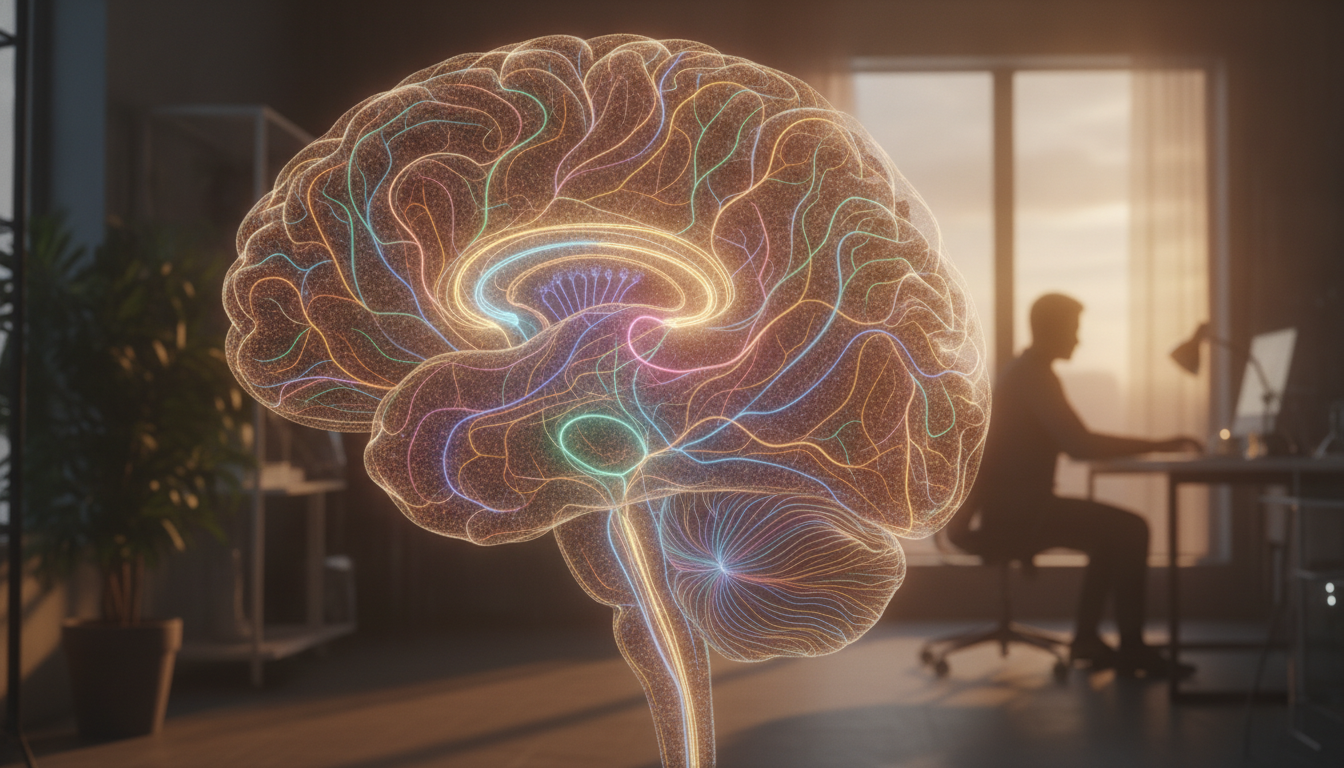
Still seeing a low score on your sleep tracker? These immediate changes improve your rest, starting tonight.
Adjust Your Environment
- Dim the lights: Two hours before bed, reduce all light. Especially blue light from screens. This signals your brain to produce melatonin, a process light directly suppresses.
- Cool your room: Your body drops its core temperature by about two degrees Fahrenheit to initiate sleep. Aid this natural thermoregulation: aim for 60-67°F (15-19°C).
Rethink Your Habits
- Avoid late caffeine and alcohol: Caffeine’s long half-life interferes with deep sleep hours after consumption. Alcohol, initially sedating, fragments sleep and disrupts REM later in the night.
- Create a buffer zone: Dedicate the hour before bed to winding down. Step away from work, intense exercise, or charged conversations. Read a physical book or practice deep breathing to calm autonomic arousal.
For Shift Workers
- Strategic napping: A targeted 20-30 minute nap before a night shift reduces sleep inertia and boosts alertness. It helps manage overall sleep debt.
Your 3-Step Protocol for Smarter Sleep Tracking
You've addressed immediate wind-down tactics, from strategic napping to calming autonomic arousal. Yet morning often brings another challenge: the sleep tracker score.
It feels like a judgment. A single number dictates how well you rested. But it's just one piece of a much larger, more complex puzzle.
Before you even glance at that number, pause. Ask yourself: How do I genuinely feel? Am I rested, alert, and ready for the day? Did I wake easily, or did I drag myself out of bed? Your subjective experience is the gold standard for good sleep. If you feel fine, a low score simply reflects the inherent limitations and inaccuracies of consumer sleep trackers. They often struggle to differentiate sleep stages precisely (J Clin Sleep Med, 2024).
If you do feel unrested, shift your focus to the metrics your tracker handles best: **total sleep duration** and the **consistency of your sleep and wake times**.
Aim for the recommended 7-9 hours of total sleep. Work to minimize day-to-day variability in your schedule, particularly your wake-up time. These are the foundational pillars of restorative sleep. If they are off, they are your most impactful targets (J Am Heart Assoc, 2019).
When you consistently feel unrested *and* your duration or consistency metrics flag, pick **one single change** from your evening routine. Dim the lights earlier, cool your bedroom by a degree, or cut that late afternoon coffee. Implement this change for 3-5 consecutive nights. Then observe if your subjective feeling improves or if those reliable metrics shift. Only after assessing that impact consider another adjustment. This allows you to isolate what truly works for your unique physiology. Adaptive sleep tools, like the SleepMedic app, track these consistent behaviors and patterns over time, providing a more holistic view than any single night's score.
Your Smarter Sleep Tracking Checklist
- Assess your subjective feeling first. How do you honestly feel?
- Prioritize total sleep duration. Aim for 7-9 hours nightly.
- Stabilize your wake time. Minimize day-to-day variability.
- Implement one change at a time. Test for 3-5 nights.
- Observe and adjust. Don't chase a score; chase better rest.
Sources
- Accuracy of 11 Wearable, Nearable, and Airable Consumer Sleep Trackers in Healthy Adults (J Clin Sleep Med, 2024)
- The Discrepancy Between Subjective and Objective Sleep Measures: A Systematic Review and Meta-Analysis (Sleep Med Rev, 2019)
- Orthosomnia: A New Form of Insomnia Driven by the Pursuit of Perfect Sleep (J Clin Sleep Med, 2017)
- Sleep Duration and Variability in Relation to Cardiovascular Disease Risk Factors (J Am Heart Assoc, 2019)
This is not medical advice. Talk to your provider.
The most powerful sleep tool remains your own body, not just the data it generates.